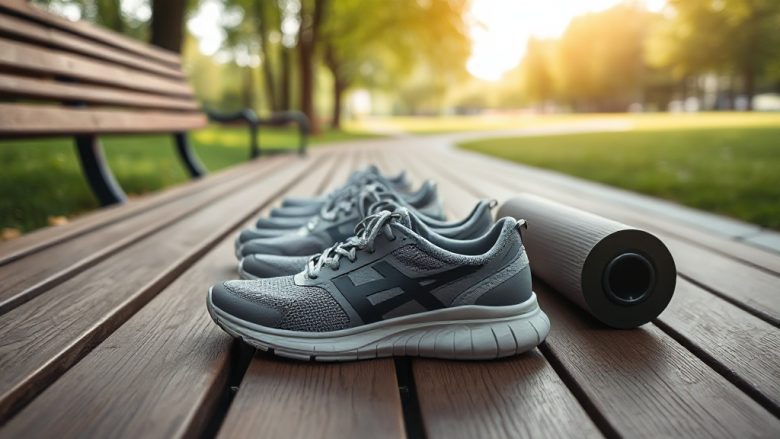
The best running shoes for flat feet are stability or motion-control models that support the arch, limit excessive inward roll, and hold the heel firmly in place. You do not need the most expensive pair on the shelf. You need the right structure under your foot and a fit that stops your ankle collapsing inward with every stride.
Flat feet change how force travels up your leg. When the arch drops, the ankle rolls inward, the shin follows, and the knee and hip start compensating. Over a few kilometres that adds up to tired arches, sore shins, and a nagging ache on the inside of the knee. The right shoe does not fix your foot, but it can slow that chain reaction down enough that running feels normal again.
Below is a short, blunt shortlist of five shoe categories worth trying. No brand cheerleading, no hype. Just what each type does well, where it falls short, and who should put it on a shortlist.
What Flat-Footed Runners Actually Need From a Shoe
Three things matter more than anything printed on the box: midsole support, heel stability, and fit.
Midsole support is the part that resists rolling inward. Look for a firmer section of foam or a denser post on the inner side of the shoe, running from the midfoot toward the heel. This is often called a medial post or a guide rail. It is not a magic arch cookie. It is a brake on overpronation, and that is exactly what a collapsing arch produces.
Heel stability comes from the shape of the heel counter and how wide the base sits under your foot. A flimsy heel counter lets the foot slide sideways, and once the foot moves, the whole leg follows. A firm, well-padded collar and a slightly wider platform keep the rearfoot centred.
Fit is where most people quietly go wrong. A flat foot is often a longer, wider foot, because the arch has flattened and pushed length into the shoe. If your toes are jammed or your midfoot is bulging over the edge of the insole, no amount of stability foam will save the run. Size up half a size if you need to, and always leave a thumb’s width in front of your longest toe.
One more thing worth saying plainly: if your feet hurt constantly, if you have sharp heel pain in the morning, or if your arch collapses dramatically on one side only, see a physiotherapist or podiatrist before you buy anything. Shoes help. They are not a diagnosis.
Five Shoe Categories Worth Shortlisting
These are categories, not specific models, because models change every year and your foot does not. Match the category to your body and your running, then try on whatever current shoe fits that description.
1. Stability Trainers
This is the default answer for most flat-footed runners and the first place to start. A stability trainer pairs a supportive midsole with a moderate medial post, usually around 8 to 12 millimetres of heel-to-toe drop, and enough cushioning for daily miles. It is the workhorse of the category.
Pros: Comfortable for long runs, widely available, easy to find in wide fits, and forgiving if you only mildly overpronate. They also transition well to walking and gym use, which matters if you only own one pair.
Cons: The support is moderate, so a very flat, very flexible foot may still roll inward on tired legs. Some models feel stiff in the forefoot, and the posted side can rub if the upper is narrow.
Best for: Runners covering 5K to half marathon distances who want one dependable pair.
2. Motion-Control Shoes
Motion control is the heavy end of the spectrum. These shoes use a firm medial post, a rigid heel, and a straighter shape on the inner side to genuinely slow pronation. They are built for feet that collapse hard and for runners who have been told they need maximum support.
Pros: The strongest anti-pronation structure you can buy off the shelf. Excellent for heavier runners, for those with very flexible flat feet, and for anyone whose ankles visibly roll in during easy runs.
Cons: They are heavier, stiffer, and often less fun to run in. The firmness can feel harsh on long distances, and a runner who does not truly need this much control may find the shoe fights their natural stride.
Best for: Severe overpronation, heavier runners, and walkers who need maximum rearfoot stability.
3. Max-Cushion Stability Shoes
This newer middle ground stacks a tall, soft midsole on top of a stability frame. You get plush landings without losing the guide rail on the inner side. It suits flat-footed runners who want comfort but still need the shoe to hold them.
Pros: Kind to knees, hips, and long-run fatigue. The rocker shape many of these shoes use helps the foot roll forward instead of collapsing inward. Great for recovery days and easy pace.
Cons: The extra foam height can feel unstable on corners and trails, and some runners lose ground feel entirely. They also tend to be the priciest category.
Best for: Flat-footed runners logging high weekly mileage who want cushioning without giving up support.
4. Neutral Shoes With an Aftermarket Insole
Sometimes the smartest move is a neutral shoe plus a proper orthotic or supportive insole. If your foot needs custom-shaped arch support rather than a built-in post, this combination often beats any stock stability shoe.
Pros: Highly adjustable. You can move the insole between shoes, replace it when it wears out, and fine-tune the level of support. It also opens up a much wider choice of uppers and fits.
Cons: You have to remove the stock insole, and the replacement changes how the shoe fits. A thick insole can make a shoe too tight, and a cheap flimsy one does nothing at all.
Best for: Runners with a specific arch shape, custom orthotics, or feet that never quite fit standard stability shoes.
5. Trail and Hybrid Stability Shoes
If your running happens on gravel, towpaths, or uneven ground, a trail shoe with stability features is worth considering. A flatter, wider platform and a protective rock plate often do more for a flat foot on rough ground than pure cushioning.
Pros: Excellent grip and lateral stability on uneven surfaces. The stiffer platform reduces how much the foot can roll, and the toe protection helps on descents.
Cons: Heavy and slow on tarmac. Deep lugs feel clumsy on roads, and many trail uppers are less breathable than road shoes.
Best for: Flat-footed runners who split their time between paths and pavement, or who run mostly off-road.
The Fit Checklist to Use in the Shop
Try shoes on late in the day, when your feet are at their largest, and wear the socks you actually run in. Then run through this checklist.
Check the length with your heel pushed to the back of the shoe. You want roughly a thumb’s width between your longest toe and the front. If your toes touch, go up half a size.
Check the width across the ball of the foot. Your foot should not spill over the edge of the insole, and the upper should not press hard on your little toe. Wide and extra-wide fits exist in most stability lines, and they are worth asking for.
Check the heel. With the laces tied, your heel should stay put when you push off. If it lifts, the shoe is too long or the heel counter is too soft for your foot.
Check the arch contact. You want gentle support under the arch, not a hard ridge digging in. If you can feel the arch cookie pressing sharply, that shoe will cause blisters on a long run.
Finally, check the flex. Bend the shoe where your foot bends, at the ball, not in the middle of the arch. A shoe that folds in the middle fights your foot instead of working with it.
If you can, run on a treadmill or around the shop for a couple of minutes. Walk in them for ten. A shoe that feels fine standing still can feel completely different at pace.
When to Replace Them and What to Do Next
Stability foam does not last forever. The support post compresses, the midsole loses its bounce, and the shoe stops doing the job you bought it for. Most running shoes last somewhere between 500 and 800 kilometres, but that number depends on your weight, your surface, and how much you sweat into them. Heavier runners and trail runners usually land at the lower end.
Watch for the warning signs rather than counting kilometres. If your shins or knees start aching on runs that used to feel easy, if the midsole has visible creases running across it, or if you can twist the shoe into a spiral with your hands, it is done. Retire it to walking duty and get a fresh pair.
Rotating two pairs also helps. Foam needs time to recover between runs, and alternating shoes spreads the wear. It sounds fussy, but flat-footed runners tend to notice the difference quickly.
One last piece of advice. Do not chase a single perfect shoe forever. Feet change, bodies change, and shoe lines get redesigned every season. The category matters far more than the model number. Find the category that supports your foot, get the fit right, and replace them when they wear out. That is the whole game.
Frequently Asked Questions
Can I run in neutral shoes if I have flat feet?
Sometimes, yes. If your flat feet are flexible but you do not overpronate much, a neutral shoe with a comfortable fit may be fine. But if your ankles roll inward visibly or you get inner-knee or shin pain, a stability shoe is usually the safer starting point.
Do I need arch supports or insoles?
Not automatically. Many stability shoes include enough built-in support. Insoles help when your arch shape does not match any stock shoe, when you have custom orthotics, or when a neutral shoe plus an insole fits you better than a posted model.
How do I know if a shoe has enough support?
Look for a firmer section on the inner side of the midsole, a firm heel counter, and a base that does not twist easily in your hands. Then run in them. If your ankle stays centred and your arch is not aching after a few kilometres, the support level is about right.
Are flat feet a problem for runners?
Not by itself. Plenty of flat-footed runners run fast and pain-free. The issue is overpronation and the strain it puts on the shin, knee, and hip. Good shoes, sensible mileage increases, and strength work for the feet and calves usually manage it well.